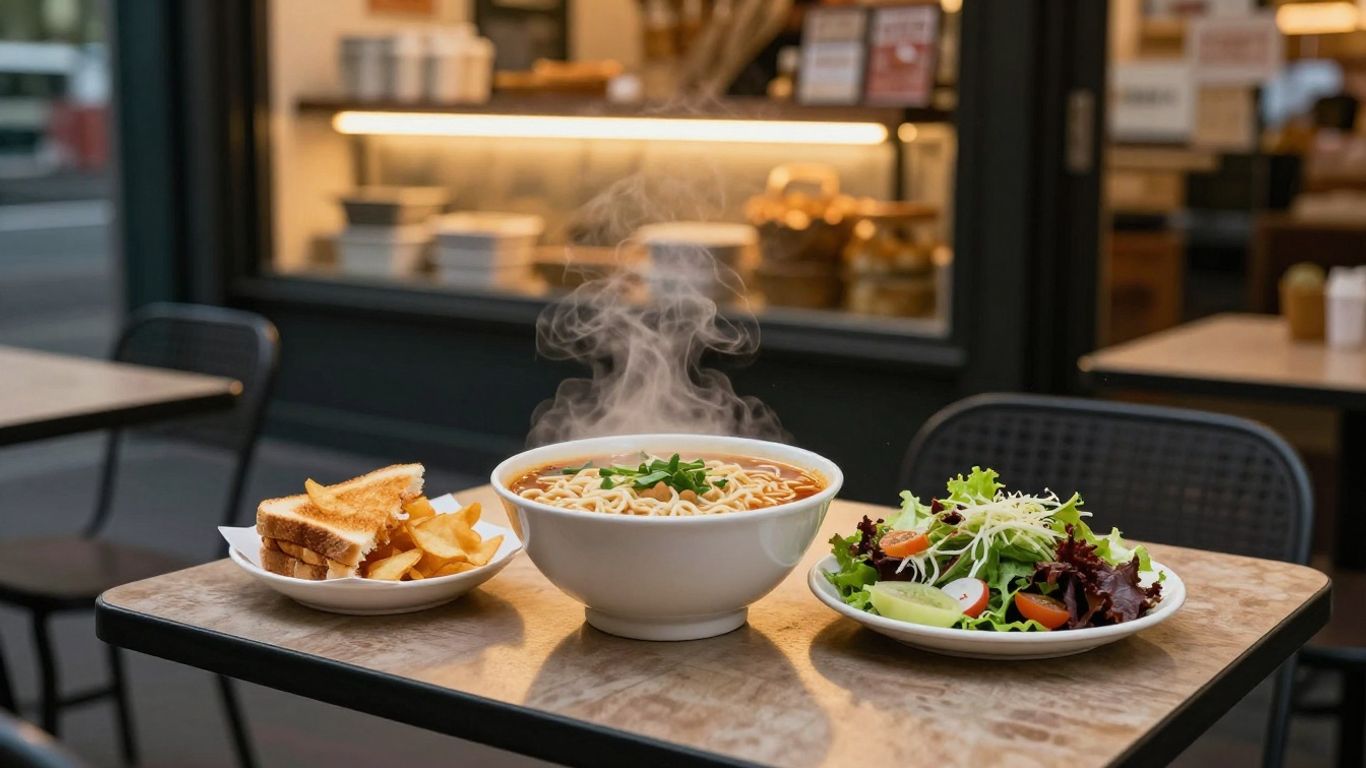
The late night eats guide: How to find great food after dark without making regrettable decisions
Key Takeaways
A good late-night meal starts with knowing what you actually want, then checking whether the kitchen is still cooking. Use this late night eats guide to make a satisfying choice without turning hunger into your only decision-maker.
- Decide whether you need comfort food, a snack, or a proper meal.
- Check kitchen closing times rather than trusting a venue’s advertised hours.
- Choose dishes that hold up well during takeaway or delivery.
- Compare the total cost, including fees, before ordering.
- Plan your trip home and store leftovers safely.
Start with the cravings, not the clock
Late-night hunger has a habit of making every menu item look urgent. Before you open three delivery apps and begin negotiating with a kebab, pause for a moment and identify the kind of meal you want. Melbourne’s suburban food scenes can offer everything from a quick bite to a full, restorative feast, but the best choice depends on your mood as much as the hour.
Match the meal to your mood
You might want something salty and comforting after a long shift, something fresh after a heavy dinner, or a warm bowl that feels like a small act of kindness. A craving for crunch points you in a different direction from a craving for softness, spice, or sweetness. Naming the mood first helps you avoid ordering a random pile of food that is technically edible but emotionally disappointing.
Choose between comfort food, quick bites, and a full feast
Think about how much time and appetite you have, not just what looks appealing on a glowing screen. Comfort food suits a slow meal at home, quick bites work when you are between trains or heading home, and a full feast makes sense when dinner was skipped entirely. If you are sharing, include one familiar option so the order does not become an experimental tasting menu by accident.
Know when “just a snack” is a delicious lie
A snack is enough when you want a little something to settle your stomach before bed. It is not enough when you have been running on coffee, skipped dinner, and are now considering three separate side dishes as a meal. Be honest about your appetite before ordering, because a small add-on can cost more than choosing one satisfying main in the first place.
Account for dietary needs before hunger takes over
If you avoid particular ingredients, eat vegetarian or vegan food, or need to manage an allergy, check the menu while you are still patient. Late-night menus may be shorter, and substitutions may not be available once the kitchen is busy. When in doubt, contact the venue directly and explain the concern clearly rather than relying on a vague menu label.
Find the best late-night food near you
Finding late-night food is partly a search task and partly a local knowledge task. Online listings can be stale, while a quiet suburban strip may have a grill, bakery, noodle shop, or takeaway counter doing excellent trade after dark. Start broad, then verify the details before you leave the sofa or begin the drive.
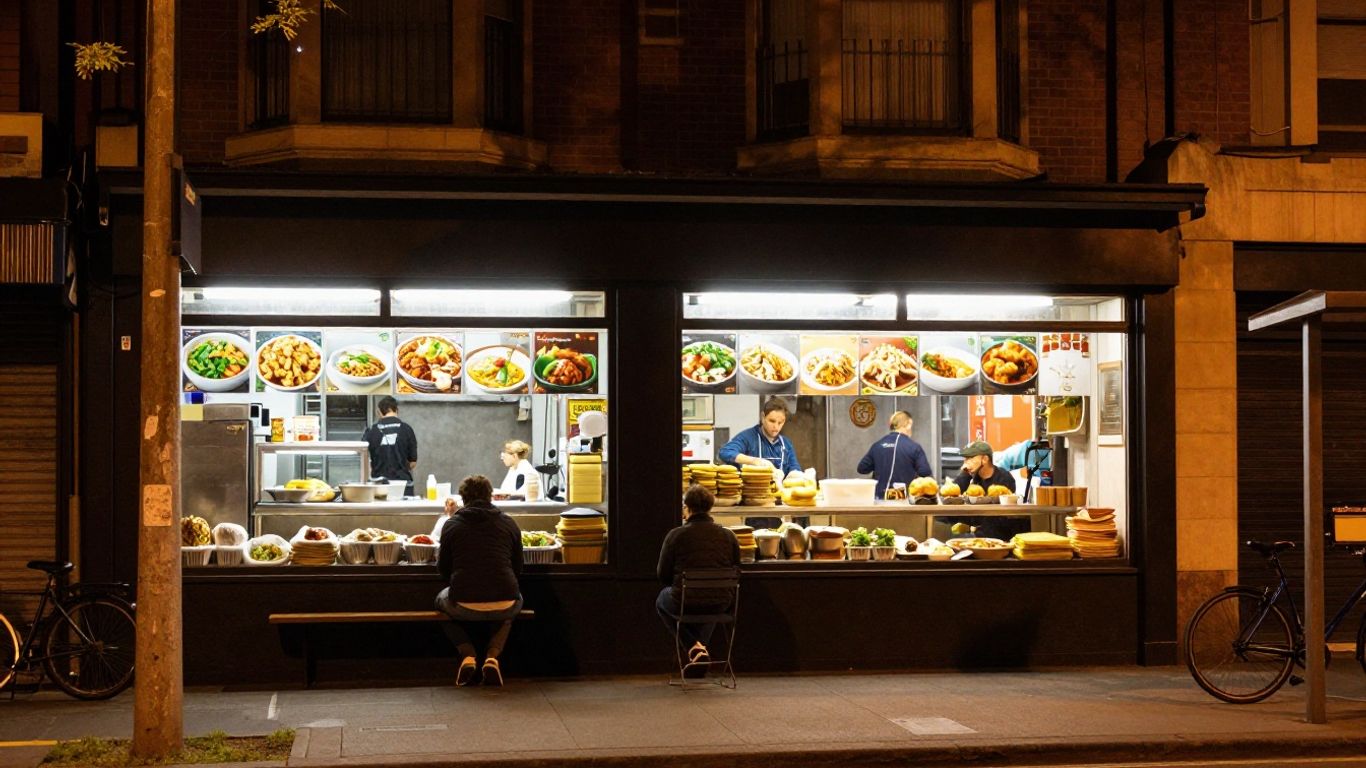
Search beyond the usual delivery apps
Delivery platforms are useful for comparing menus, but they do not always show every late-night option nearby. Search for the suburb alongside terms such as “late kitchen”, “takeaway”, “night menu”, or “open now”, then inspect the venue’s own page or social channels. Local community groups can also point you towards small operators that do not spend much time polishing their online presence.
Use neighborhoods, landmarks, and open-kitchen hours
Search by a nearby station, shopping strip, hospital, market, or main road rather than using only your suburb name. Night workers and transport hubs often create pockets of food activity that stay open later than surrounding businesses. If the venue lists separate opening and kitchen hours, save the kitchen time; the dining room may remain open after the cooks have packed up.
Check whether “open late” means actually serving food
A venue can be open for drinks, cleaning, or collection while the hot food service has already finished. Look for a stated last order time, a live ordering page, or a recent update from the business. A quick phone call is less glamorous than a midnight pilgrimage, but it is considerably less tragic when you are already hungry.
Look for local favorites instead of internet bait
A long list of glowing reviews is less useful than recent comments that mention the food, service, and late-night hours specifically. Notice whether locals return for a particular dish or simply praise the atmosphere. In suburban Melbourne, the unflashy shop with steady regulars is often a safer bet than the venue with dramatic photos and no clear information about when the kitchen closes.
Decode the late-night menu
Menus become more revealing after dark. The dishes that survive a busy kitchen, a short staff roster, and a trip across town are often the ones worth choosing. You do not need to be fussy; you simply need to notice which options are designed for the hour and which ones are lingering from the daytime menu.
Spot dishes that travel well
Look for food with sturdy textures, sensible packaging, and sauces that can be added separately. Fried items, filled flatbreads, rice dishes, noodles, curries, and toasted sandwiches can all travel well when packed properly, though crisp food may soften on the way. A meal that arrives warm and intact is usually better than a delicate dish that has spent forty minutes steaming inside its container.
Separate reliable classics from risky experiments
Late at night, a familiar classic can be exactly what you need. Choose the house burger, dumplings, grilled chicken, chips, or a well-loved noodle dish when you want predictability; save an unfamiliar combination for a time when you are awake enough to appreciate the surprise. This is not a rule against adventurous eating, just a reminder that hunger is a poor restaurant critic.
Identify the best value when prices rise after dark
The cheapest-looking item is not always the best value if it leaves you ordering several extras. Compare portion size, protein, sides, and whether delivery charges apply to the whole order. These broad comparisons help you see where your money is going without pretending that every venue uses the same serving size or pricing model.
| Meal choice | Usually suits | What to check | Value clue |
|---|---|---|---|
| Filled roll or wrap | A quick solo meal | Freshness and sauce placement | One item may be enough |
| Rice or noodle bowl | A proper, warming dinner | Portion and protein | Often travels neatly |
| Burger and chips | Comfort-food cravings | Packaging and chip texture | Compare the complete meal price |
| Shared sides | Groups with mixed appetites | Number of pieces | Better when several people are ordering |
The table is a starting point, not a verdict. If you are genuinely hungry, one complete meal may be more economical and more satisfying than collecting several small items that seemed cheap individually.
Watch for limited menus and kitchen cutoffs
Some venues reduce the menu late at night to focus on dishes the remaining kitchen team can prepare consistently. That is not necessarily a bad sign; a shorter menu can mean quicker service and fewer disappointed orders. Check whether add-ons, desserts, drinks, and special requests are still available before you build an elaborate order around them.
Pick the right dining format
The same food can feel completely different depending on where you eat it. Dine-in gives you a proper reset, takeaway keeps you moving, and delivery is useful when leaving home feels like an unreasonable expedition. Choose the format that matches your energy, transport, and the distance between the kitchen and your plate.
Decide between dine-in, takeaway, and delivery
Dine-in is the strongest choice when you want a hot meal, a seat, and a little human company. Takeaway suits a short trip home or food that is best eaten immediately, while delivery wins when you are tired, caring for someone, or already settled in. Be realistic about travel time: the perfect dish can become a mediocre one if it spends too long in transit.
Know when a food truck beats a restaurant
A food truck can be ideal for a direct, fast meal with a focused menu. You may get something fresh from the grill without paying for a large dining room or waiting through a long service. Check where the truck is parked, whether it accepts your preferred payment method, and whether the weather has turned the outing into a damp test of character.
Choose a 24-hour diner for maximum flexibility
A 24-hour diner is useful when your arrival time is uncertain or your group cannot agree on one cuisine. The menu usually offers enough variety for breakfast fans, burger seekers, and people who insist they only want toast. Even then, check whether the full menu is served all night, because “24-hour” can describe the venue rather than every item on it.
Find the right setting for solo meals and group orders
For a solo meal, look for a counter seat, quick service, and a comfortable atmosphere where you will not feel hurried. Groups need room, clear ordering, and food that can be shared without a complicated negotiation at the table. If everyone wants something different, takeaway may be easier than forcing the whole party into one restaurant’s narrow late menu.
Order smarter when hunger is making decisions
A late-night order should leave you fed, not puzzled by a pile of containers and a receipt that seems to have developed extra limbs. Take a minute to decide what the meal needs: a main, something fresh, a drink, or a small side. That tiny pause can reduce waste and make the order feel deliberate rather than accidental.
Build a balanced order without overcommitting
Start with one substantial item, then add something only if it fills a real gap. A warm main with vegetables, salad, fruit, or a modest side may feel more complete than several rich items competing for attention. If you are ordering for tomorrow as well, choose food that will reheat safely and still taste good rather than doubling everything indiscriminately.
Share strategically when everyone wants something different
For a group, agree on the shared centrepiece first and let individual preferences shape the extras. Pick dishes that can be portioned easily, label anything with a strong spice level, and avoid ordering five versions of the same fried side. A little coordination keeps the table generous without turning the meal into a logistics meeting.
Before you press the final button, run through a short check. It is particularly useful when you are ordering from a small venue with a limited late menu:
- Confirm the number of mains and the serving size.
- Add sauces, cutlery, or napkins only if you need them.
- Check whether the order is collection, delivery, or dine-in.
- Review the estimated preparation and arrival time.
That check takes less than a minute and can prevent the familiar late-night discovery that the meal contains no sauce, no side, and somehow no spoon. Hunger may be dramatic, but it does not need to be in charge of the paperwork.
Avoid delivery fees, surge pricing, and surprise charges
Look at the final total rather than the menu price alone. Delivery, small-order fees, service charges, and minimum spends can change the decision, especially when you are ordering one modest meal. If collection is nearby and safe, it may offer better value; if not, compare the total with the cost of travelling to the venue before deciding.
Confirm portions, condiments, and closing-time details
Read the item description carefully, particularly when a photograph shows extras that are not included. Confirm whether sauces, rice, bread, or utensils are separate, and check the estimated preparation time if the kitchen is close to closing. A polite call can clarify a confusing menu, provided you keep it brief and accept that the staff may be juggling several orders.
Stay safe, comfortable, and pleasantly fed
A successful late-night meal includes the trip home, the feel of the venue, and what happens to the leftovers. You should be able to enjoy your food without rushing, taking unnecessary risks, or waking up to a container of questionable breakfast. A little planning keeps the night satisfying from first bite to final clean-up.
Plan transportation before the final bite
Work out how you are getting home before you sit down to eat. Check public transport, organise a lift, or choose a nearby venue if you expect to be tired; do not make a difficult decision while carrying a bowl of noodles. If you are driving, keep the meal and the journey separate and make a safe plan before ordering anything that might affect your concentration.
Check venue atmosphere and neighborhood conditions
A venue can be open without feeling comfortable for the kind of visit you have in mind. Notice lighting, seating, queues, staff presence, and how busy the surrounding street is. If the area feels wrong when you arrive, trust that impression and choose takeaway, another venue, or a safer route home instead.
Handle allergies and food-safety concerns
Tell the venue about allergies clearly and ask whether the kitchen can manage the request; do not assume that removing one visible ingredient makes a dish safe. Keep hot food hot and cold food cold, and be cautious with meals that have sat out for an extended period. When something smells or looks wrong, stop eating it and contact the venue rather than trying to talk yourself into finishing it.
Keep leftovers fresh until tomorrow’s breakfast 彩神争霸有**
Let leftovers cool sensibly, transfer them to a clean container, and refrigerate them promptly rather than leaving them on the bench until morning. Store sauces separately where possible, mark the container if you are likely to forget what it contains, and reheat only the portion you plan to eat. Some foods are better the next day; others are best accepted as a delicious memory.
Conclusion
The best late-night meal is not always the trendiest or closest option. When you identify the craving, verify the kitchen hours, choose food that suits the journey, and check the final cost, you give yourself a much better chance of ending the night well fed and free from regret.
Frequently Asked Questions
What makes a good late-night meal?
A good late-night meal matches your appetite, travels well, and comes from a kitchen that is still serving food. Familiar, well-prepared dishes are often more satisfying than complicated choices made in a rush.
How can you check whether a restaurant is really open late?
Look for separate dining and kitchen hours, a current ordering page, or a recent update from the venue. If the information is unclear, call before travelling.
Is takeaway better than delivery late at night?
It depends on distance, transport, food type, and total cost. Takeaway can preserve texture and reduce fees, while delivery is useful when you are tired or cannot easily leave home.
What food travels best after dark?
Filled rolls, rice dishes, noodles, curries, toasted sandwiches, and sturdy grilled meals generally cope well with a short journey. Crisp food may soften, so sauces and toppings packed separately can help.
How much food should you order when you are very hungry?
Choose one complete main first, then add a side only if it serves a clear purpose. Waiting a few minutes before adding more can prevent waste and the uncomfortable aftermath of an over-order.
What should you do about a food allergy at a late-night venue?
Explain the allergy directly and ask whether the kitchen can safely accommodate it. If the answer is uncertain, choose another meal or venue rather than relying on assumptions.
How should you store late-night leftovers?
Place leftovers in clean containers and refrigerate them promptly. Reheat only what you intend to eat, and discard food that has been left out too long or seems unusual in smell, appearance, or texture.